
Share Steven Worley's obituary with others.
Invite friends and family to read the obituary and add memories.
Stay updated
We'll notify you when service details or new memories are added.
You're now following this obituary
We'll email you when there are updates.
Select your format and elements to print

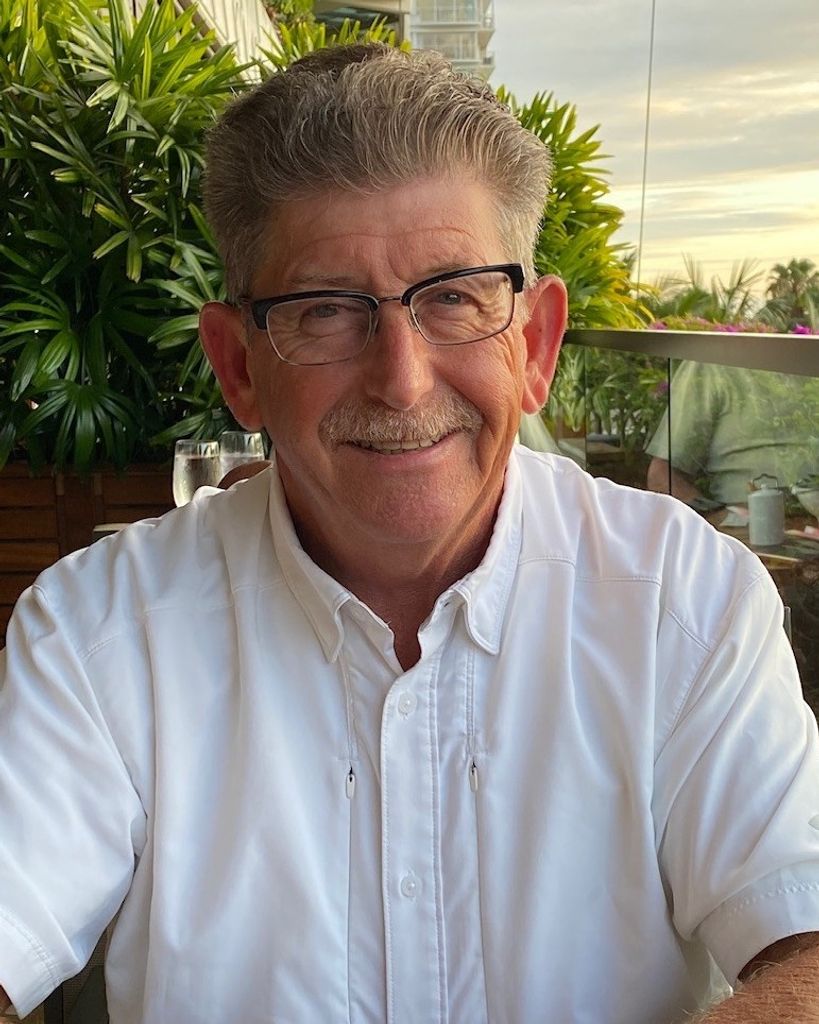


Steven Worley
Dec 7, 1961 — Sep 22, 2025
On December 7th, 1961, in National City, San Diego—twenty years after the attack on Pearl Harbor—Steve Worley was born. The date itself was marked by fortitude, sacrifice, and courage. And those same qualities would come to define the man who entered the world that day.
He was the son of Alfred and Melva, a loving and dutiful son all his life, and a brother to Beth, Allen, and Kathy. To his family, he was not just a sibling but a lifelong ally—the kind of rare bond that distance cannot weaken, that time cannot erode, and that hardship only forges stronger. Together they shared not just childhood, but a lifetime of loyalty, laughter, and steadfast love.
He grew up in Redondo Beach, the ocean as his backdrop, before moving with his family to Carson. In 1980, after graduating from Carson High School, he stepped into the working world, learning to repair Maytag washers and dryers. It may have seemed small at the time, but it was a glimpse of the man he would become: a man who fixed what was broken, who kept the world around him running, and who never gave up on a problem until his determination and know-how carried it through.
In 1982, he took Crystal’s hand in marriage, and for 43 years they walked side by side—through laughter, through trials, through every joy and storm life could bring. Together they raised a family: myself, my brother Andrew, and my sister Victoria. And through that family came two more daughters, by marriage but also by love: Clarissa, who shares her life with me, and Nicki, who shares hers with Andrew. To Dad, they weren’t “in-laws”—they were his own, embraced fully into the circle of his love.
And from us came four grandchildren—Nathan, Jack, Dane, and Ella—bright sparks who became the light of his days.
But my father’s love refused to be confined by blood alone. His heart reached further still. To Frank and Lindsey, and to their children Frankie and Lucy—friends who became family—he was no less than a father and a grandfather.
And to all the little ones, he was “Papa.” Not just a name, but a legacy. He held their small hands, took them on walks, spoiled them with treats, and filled their days with a love so steady it became the very rhythm of their childhood. To his grandchildren, he was more than a grandfather—he was their heartbeat.
Steve devoted 36 years of his life to Valero, the oil refinery in Wilmington, California. When he first walked through those gates, it was simply to provide for his family. But men of his character don’t settle for the ordinary. Through grit and tenacity, he rose through the ranks, and over time the work became something greater—a calling to protect and to serve those around him.
He joined the Rope and Rescue team, the refinery’s last line of defense when lives hung in the balance. When others couldn’t reach you—stranded on a tower, trapped inside a tank, overcome in a confined space, or clinging to a flare stack hundreds of feet above the ground—Steve was the one who trained to bring you home. Amid the clang of steel and the hiss of pressure lines, where explosive fuels waited for the smallest mistake, he belonged to the brotherhood who said, “No matter where you are, we will come for you.”
From Rope and Rescue, Steve went on to serve in the Fire Department—the unit that stood between the refinery and catastrophe. At a place where millions of gallons of fuel and unseen dangers flowed through a maze of steel and towers, fire was not an accident—it was the enemy. The men of that department were trained for the worst: massive hydrocarbon fires, jet flames roaring out of ruptured lines, storage tank infernos that could melt steel, gas leaks that could suffocate in seconds, explosions that could shake the ground.
Steve became one of them. He learned to fight not the house fires of the city, but the towering flames of industrial blazes, using foam cannons and chemical units built to smother monsters. He trained to stand firm when alarms sounded, to run toward the danger while others fled. And in time, he didn’t just serve that department—he led it. As Battalion Chief, he drilled until skill became instinct, because he knew hesitation could cost lives. He carried the burden of calm under crushing pressure, guiding others when panic threatened to take hold. He became the man you trusted not only to fight the fire, but to bring every man home.
And even at home, the firefighter in him never faded. Ever the fireman, he never let Mom bring a real Christmas tree into the house—too much of a hazard, he’d insist. So every December our holidays were safe, our ornaments shined, and the pine smell came from a candle instead of the living room.
But even that wasn’t enough for him. In 1992, he found a new way to serve—walking into nursing homes week after week with his guitar in hand. He called it ministry, but really it was love in action. He went to the places most people never visit, where the elderly sat in quiet rooms, too often forgotten by the world outside. He brought them songs, prayers, and laughter—and they loved him for it. The music stirred something alive in them, and for a while the loneliness faded. For those who had no family left, or whose families no longer came, his visits meant even more. To them, Steve wasn’t just a visitor—he was proof they weren’t invisible.
At Easter, while others gathered under open skies, Steve stepped into those quiet rooms and became an instrument of God—bringing His Word and His promise to His children who could not rise to meet the dawn. With a guitar and a voice, he carried heaven’s message to the bedridden: that even in weakness, hope still rises, and no one is ever forgotten by their Creator.
This was my father’s heart: to bring light into overlooked places. Where others might have seen only decline, he saw souls worth celebrating—people still deserving of joy, dignity, and love.
Even in retirement, he refused to fade into stillness. At Trinity Law School, he became Facilities Manager—but for Steve, it was never just a job. He greeted professors, staff, and students as if they were family, learning their names, listening to their stories, and making them feel seen. To some, he was the first friendly face of the day; to others, the steady hand who quietly kept things running when no one else noticed.
He fixed what was broken, but more importantly, he built community. And at Christmastime, he transformed the campus. He built towering light displays and decorated trees until the grounds seemed to glow, filling cold hallways with warmth and giving the weary a sense of wonder. To those who passed through, it was more than decoration—it was his way of reminding them that light belongs even in the darkest season. And in truth, those displays reflected who he was: a man who illuminated the lives around him, bringing joy and spirit wherever he went.
And in this, he was the same man he had always been—the firefighter who protected his brothers, the servant who brought light into quiet places. Retirement never changed his calling, because service was never just what he did. It was who he was.
Outside of work, he thrived in motion. He biked for miles with the same determination he carried everywhere else, pushed himself through workouts long after others would have stopped, and poured his hands into the soil of his garden, coaxing life from the earth. If something was broken, he fixed it. If someone needed help, he showed up. His energy wasn’t restless—it was purposeful.
Home was never a place of stillness with Steve in it. He was the man who would help repair a neighbor’s fence, build projects that others only talked about, and find joy in keeping things running. He cared for people not in grand displays, but in the countless quiet ways that mattered most—checking in, lending a tool, offering advice, or simply showing up when he was needed. His love of motion was never just about staying busy; it was about service. Every mile pedaled, every nail hammered, every seed planted seemed to speak the same truth: life is a gift, and it’s meant to be used well.
And he wasn’t without his quirks. Steve carried a goofy sense of humor that could break tension in an instant, often with a grin that gave him away before the punchline even landed. In later years, he even developed a fondness for tossing around conspiracy theories—not so much because he believed them, but because he enjoyed the spark of conversation they created. He’d lean in with that twinkle in his eye, stirring the pot just enough to get everyone laughing or rolling their eyes. Well, maybe he did believe in some of them.
These little quirks, mixed with his strength and steadiness, made him not only respected, but deeply loved. They reminded everyone that beneath the firefighter, the servant, the man of faith, there was also someone who loved to laugh, to joke, and to share life in all its oddities.
Yet like all of us, his life was not free from sorrow. Just four months after retiring, he and my mom faced the unthinkable—the loss of their only daughter, Victoria. The wound was deep, and it never closed. It was a sorrow too heavy for words, a silence that settled over every day. And still, even with a shattered heart, he pressed forward. He bore grief with strength and with faith, refusing to let pain harden him. He never gave up on love, never stopped pouring himself into the family that remained.
Dad carried his family through Victoria’s death. He carried us when he himself was stumbling. He became the steady hand when we didn’t know where to place our own. He kept us moving forward, even when he didn’t have the map. There were nights filled with turmoil, questions with no answers, lessons grief tried to teach us that we were too broken to absorb. Yet in the middle of that storm, he was there—anchoring us, reminding us by his presence that survival was possible.
And in many ways, this became his final and greatest act of strength—not the rescues, not the fires, not even the decades of service—but the quiet, daily courage of leading his family through their darkest valley. Even in grief, he stood as a pillar, though he often felt lost inside. He showed us what it means to endure when endurance feels impossible, to keep faith alive when prayers seem unanswered, and to love without end, even with a heart that would never be whole again.
So how do we measure a man like Steve Worley? Not by money, not by possessions, not by the titles on a business card. A man like him is measured by the lives he touched, the family he raised, the battles he fought, and the love he gave without ever holding back.
He was a husband of 43 years, faithful to the very end. He was a father who taught his children strength in trial, courage in fear, and faith in all things—not just with his words, but with his example. He was a grandfather whose greatest joy was found in laughter and in the sparkle in his grandkids’ eyes—a sparkle he helped put there, and one that will carry his joy forward long after he is gone. He was a loving and dutiful son, honoring his parents with respect and devotion throughout his life. He was a brother and a friend, loyal and steady, the one you could trust when the ground gave way. He was a leader who stood calm when chaos struck, a servant who gave his time and his heart to the forgotten. He lived like a warrior, and he loved like a saint.
And yet, he was more than the sum of those roles. He was the goofy sense of humor that cut through tension, the strong hands that fixed what was broken, the light displays at Christmas that turned a place into a home. He was the man who carried his family through heartbreak even when his own heart was shattered, the man who never stopped serving, never stopped loving, never stopped moving forward.
Today, we do not send him off in silence—we send him off in honor, for his story does not end here, because his legacy is carved into us: his family, his friends, his grandchildren. The lessons he taught us—through courage, through sacrifice, through faith, through love—will echo long after we are gone.
Dad, you lived with strength.
You fought with courage.
You loved with everything you had.
And now, your watch is over. Rest, knowing we will carry the fire from here. We will carry your faith, your service, your love forward—because you showed us how.
Thank you, Dad. We will never forget you.
Because service was never just what you did— it was who you were.
And through us, it will never die.
Service Schedule
Past Services
Viewing
Friday, October 3, 2025
6:00 - 9:00 pm (Pacific time)
Calvary Chapel Pacific Coast
Funeral Service
Saturday, October 4, 2025
10:00 - 11:00 am (Pacific time)
Calvary Chapel Pacific Coast
Graveside Service
Saturday, October 4, 2025
12:30 - 1:30 pm (Pacific time)
Westminster Memorial Park
Guestbook
Visits: 311
This site is protected by reCAPTCHA and the
Google Privacy Policy and Terms of Service apply.
Service map data © OpenStreetMap contributors